Troubled times
What kind of country are we leaving our children and grandchildren?

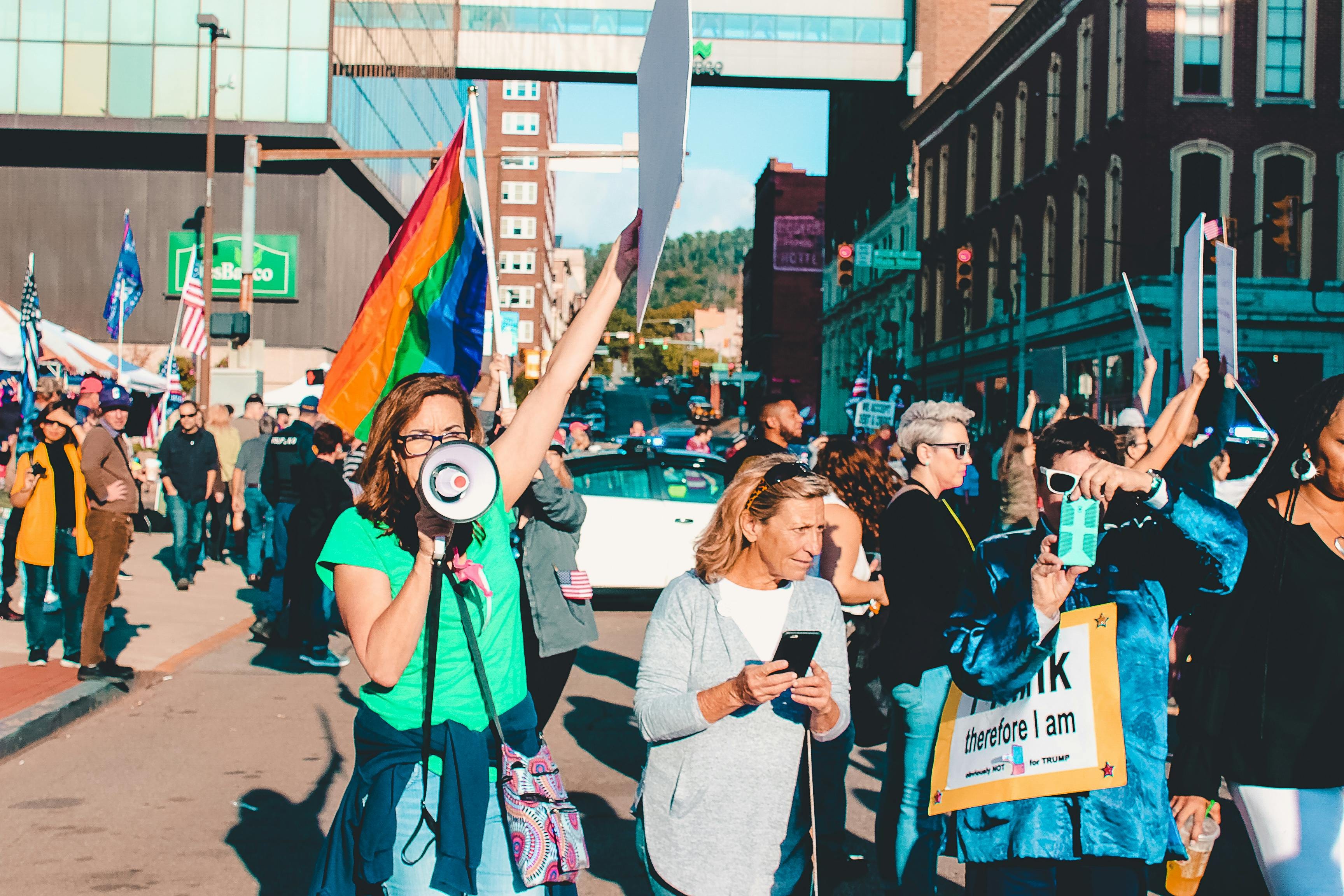
Photo by Rosemary Ketchum / Pexels
To say we’re living in troubled times is an understatement. Since 2026 began, the U.S. has captured the leader of Venezuela and his wife, bombed Syria and threatened to take over Greenland by force if necessary. Not only that, but we’ve also witnessed the shooting of a Minnesota woman by an ICE agent.
After a church service this morning, I told the associate pastor the toxic climate in the U.S. today is 10 times worse than mood of the country in the 1960s when I came of age so to speak. Oh sure, the 1960s included the highly unpopular Vietnam War, race riots, civil rights protests, and assassinations of President John F. Kennedy, Martin Luther King Jr. and Robert Kennedy.
But today an “us versus them” mentality has a stranglehold on America. It’s almost as if we’re two different countries with two different mindsets. We haven’t had this much division since the Civil War and the fight over preserving the union and abolishing slavery. Unfortunately, the divide is fueled by many talking heads on talk radio, social media and television.
With what went on in Minnesota last week, it’s not surprising the associate pastor went off course from her prepared sermon and took another approach to remind us that we're all Gods people — even President Donald Trump, former presidential candidate and first lady Hillary Clinton, House Speaker Mike Johnson and House Minority Leader Hakeem Jeffries. Yes, she referred to them by name — something clergy don’t usually do.
The political and social climate in Iowa isn’t much better these days. About a year ago, I watched the Iowa Legislature and governor take away rights from a protected class of citizens — the first state to do so. Iowa has some of the most polluted water in the country and the second highest cancer rate in the nation.
The state is facing a fiscal cliff due in part to the majority party’s emphasis on cutting state income taxes and using reserve funds to balance the budget. For fiscal year 2026, the state is expected to spend $1.26 BILLION more than it takes in based on expenditures of $9.425 billion and revenues of $8.158 billion. To cover the anticipated deficit, lawmakers will have to transfer $633.4 million from the Taxpayer Relief Fund and $633.4 million from other one-time funds, according to state Senator Tony Bisignano, D-Des Moines.
The Republican Party plans to run these deficits through at least fiscal year 2030, Bisignano says. “We also know that the governor’s estimates in her five-year projections have been off by roughly $1.36 BILLION,” the state senator adds.
Bisignano claims the Republicans’ budget emphasizes corporations and the very wealthy. Between fiscal year 2024 and fiscal year 2027, corporations will pay nearly $200 million less in income taxes while sales tax collections will have increased by more than $350 million, according to the state’s Revenue Estimating Council. If that seems out of whack, it is.
I was one of nearly 800 people who responded to the Democrats legislative priority survey recently. (I am registered, however, as an independent voter.) When asked what costs/goods impact your family’s monthly budget the most, groceries and healthcare were cited the most. For the first time ever, I kept track of how much I spent on groceries last year. The results surprised me. I spent an average of $200 a month, and it didn’t seem like I bought that much food.
Then when I see the cost of my Medicare Part B health insurance and prescription drug coverage increasing by $27.50 a month, so much for the $38 increase in my monthly social security allotment.
Respondents were also asked what state government could do to make a positive impact on their community. The top answers were invest in public education, protect the water and the environment, make life affordable, expand healthcare access, and ensure fair governance and rights.
The state’s funding of private school vouchers has exacerbated public schools’ financial problems. The Des Moines School District, the state’s largest, plans to close some buildings although no specific locations have been announced. The West Des Moines School District is considering closing an alternative school and reducing its program for talented and gifted students. The Cedar Rapids School District, the state’s second largest, is looking at cutting more than $10 million after a proposed $117 million bond referendum failed last November.
The state’s failure to fund public education adequately has forced school boards to ask taxpayers to pay more for improvements and realignments. Des Moines School District voters overwhelming passed a $265 million bond issue last November. Voters in the West Des Moines School District approved a $135 million bond issue. Voters in the Ankeny School District supported a $130 million bond issue proposal. Meanwhile, Southeast Polk District voters said “yes” to a $51 million bond issue to build a new elementary school.
The state’s polluted water and high cancer rates have been well documented in recent months. Unfortunately, I haven’t heard the governor, or Republican legislators, say tackling those issues will be among their top priorities when the new legislative session starts this week. Tax cuts still seem to be their top priority.
Of course, health care in rural Iowa isn’t helped when Medicaid spending and Affordable Care Act subsidies are cut, which forces people to make difficult choices or go without health care entirely. I noticed recently that the hospital in Fort Madison in southeast Iowa will stop delivering babies, forcing expectant mothers to go to Burlington or Quincy, Illinois, hospitals. It’s Lee County neighbor, Keokuk, hasn’t had a hospital for three years.
The state’s decision to take away rights from LBTQ citizens last winter was a black mark on state history. It’s interesting that some local governmental bodies such as the Urbandale School District have kept gender identity in its policy that gives students the opportunity to receive a quality education.
The election of former West Des Moines City Council member Renee Hardman on December 30 provided some hope. Hardman, a Democrat, was elected to fill a state Senate seat formerly filled by the late Democratic state Senator Claire Celsi. Hardman’s election prevented Republicans from having a super majority in the Senate. Hardman beat Lucas Loftin 71.5 to 28.5 percent, according to unofficial results from the Iowa Secretary of State’s office.
The situation is so bleak that I don’t watch the national news on some nights. I worry about the world my daughters and grandchildren will live in when they become grandparents and parents. I’m glad, however, my church’s pastors aren’t afraid to speak out and name names.